Difference Between Thermocouple vs RTD: Which Suits Your Application?
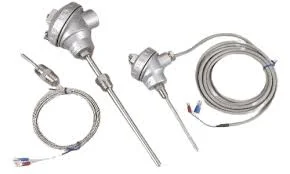
In modern manufacturing, measuring temperature accurately is crucial for process repeatability, quality control, and energy efficiency. Two sensor technologies dominate industrial temperature measurement today: Thermocouples and RTDs (Resistance Temperature Detectors).
Both sensors deliver proven performance, but they possess fundamentally different operating principles, strengths, and limitations. This article provides a comprehensive comparison to help you choose the ideal sensor for your application.
What is a Thermocouple?
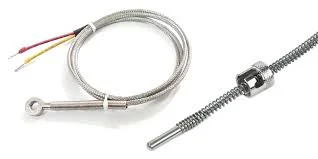
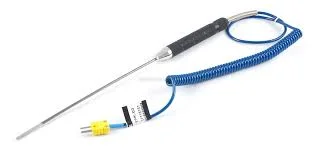
A thermocouple is a thermoelectric sensor formed by welding two dissimilar metal conductors at a measurement tip. When temperature differences occur between the hot junction and cold reference junction, a proportional millivolt voltage is generated via the Seebeck effect.
What is an RTD?
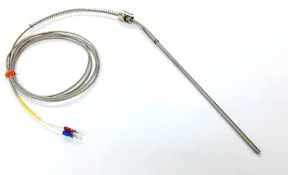
An RTD (such as the standard Pt100 or Pt1000) operates on the principle that the electrical resistance of pure metal wire (typically high-purity platinum) increases predictably and linearly as temperature rises.
Key Differences: Thermocouple vs RTD
| Parameter | Thermocouple | RTD (Pt100) |
|---|---|---|
| Temperature Range | -200°C to 1,800°C | -200°C to 650°C |
| Accuracy | Moderate (±1°C to 2°C) | Very High (±0.1°C) |
| Response Time | Extremely Fast | Moderate |
| Vibration Resistance | Extremely Rugged | More Fragile |
| Cost | Economical | Higher |
When Should You Choose a Thermocouple?
- Operating temperatures exceed 650°C (furnaces, boilers, molten metal, kilns).
- High mechanical vibration or physical shock is present on the machinery.
- Fast response to rapid thermal transients is required.
When Should You Choose an RTD?
- High accuracy, repeatability, and long-term calibration stability are paramount (pharmaceutical, cleanroom, food & beverage, calibration laboratories).
- Operating temperatures remain comfortably below 600°C.
Conclusion
Choose a Thermocouple when you need a rugged, economical sensor for high-temperature processes. Choose an RTD when precision, linearity, and repeatability are your top priorities.