Digital vs Analog Thermocouple: Which is More Efficient for Modern Industry?
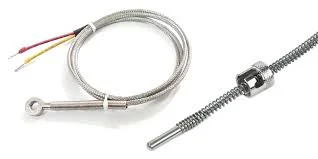
In the Industry 4.0 era, efficiency is not just about production speed, but also about how data is collected, processed, and utilized in real time. One of the most critical aspects in industrial operations is temperature measurement, especially in high-temperature processes such as metal heating, smelting, petrochemical refining, and food & beverage processing.
Thermocouples, as one of the most widely used industrial temperature sensors, come in two primary forms: analog and digital. But which one is truly more efficient for modern industrial requirements?
Let us explore the core differences between digital vs analog thermocouples, and the respective advantages of each in driving industrial automation and operational efficiency.
An Overview of Analog Thermocouples
An analog thermocouple is a traditional sensor that generates a small millivolt (mV) voltage directly proportional to the temperature differential between two dissimilar conductor metals. This raw electrical signal is transmitted over wiring to an external transmitter, analog indicator, or control module such as a PLC or standalone temperature controller to be converted into temperature values.
Key characteristics:
- Output is a raw analog signal (mV)
- Requires external conversion modules or signal conditioners
- More susceptible to electromagnetic noise over long cabling distances
What is a Digital Thermocouple?
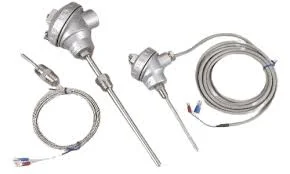
A digital thermocouple typically refers to a conventional thermocouple assembly integrated with an internal or compact head-mount digital transmitter that directly converts the millivolt signal into digital data. This data can be transmitted to industrial control networks via standardized communication protocols such as Modbus, RS485, CAN, or even wireless Industrial IoT protocols.
Key characteristics:
- Direct digital data output
- Seamless integration with SCADA, PLC, DCS, or Cloud architectures
- Delivers precise readings without risk of signal loss or degradation over long cable runs
Key Differences: Digital vs Analog Thermocouples
1. Accuracy and Resolution
Digital thermocouples generally provide higher accuracy and resolution because analog-to-digital conversion (ADC) takes place right at the sensor head before external interference can distort the low-level millivolt signal.
2. Ease of Integration
In today's fast-evolving Industrial IoT landscape, digital thermocouples are far simpler to integrate. Wiring is drastically reduced and daisy-chaining multiple sensors over a single bus reduces installation overhead compared to individual point-to-point analog wiring.
3. Durability and Reliability
Analog thermocouples possess a mechanically simple and rugged design without sensitive electronic components at the probe tip, making them exceptionally reliable in extreme high temperatures and hostile environments. Digital thermocouples offer excellent signal immunity, but their electronic transmitter units must be protected from extreme ambient heat.
4. Interference Resistance
Digital signals are immune to the electromagnetic interference (EMI) commonly produced by heavy industrial machinery, motors, and high-voltage variable frequency drives (VFDs).
5. Maintenance and Diagnostics
Digital thermocouples typically feature smart on-board diagnostic capabilities, such as burnout detection, cold-junction health monitoring, and broken-wire alerts.
Which is More Efficient for Modern Industry?
If you operate an integrated modern automation setup (Industry 4.0), digital thermocouples represent a far more efficient, future-ready solution offering:
- Higher measurement accuracy
- Simplified wiring and automated network integration
- Real-time telemetry and process logging
- Automatic fault detection and preventive maintenance
However, traditional analog thermocouples remain essential and cost-effective for:
- Simple standalone equipment with budget considerations
- Ultra-high temperature environments where remote electronics are preferred
- Plants with established analog control loops where transmitter conversion is unneeded
Recommendation: Align with Your Needs and Infrastructure
At PT. Alfa Fikrindo Utama, we manufacture premium industrial-grade analog thermocouple assemblies as well as digitally integrated sensor solutions customized to the exact technical specifications of your industrial machinery.