Common Thermocouple Problems and How to Solve Them
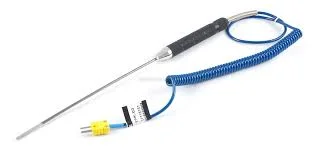
Thermocouples are among the most versatile and durable temperature sensors used in manufacturing, metallurgy, and chemical processing because of their ability to withstand extremely high temperatures. However, measurement errors or signal failures can compromise product quality, disrupt operations, or pose safety hazards.
Here are 6 common thermocouple problems encountered in industrial applications and practical guidelines on how to resolve them:
1. Inaccurate Temperature Readings
Symptom: The temperature displayed on the controller differs noticeably from the actual process temperature.
Root Causes:
- Using incorrect extension or compensating cables that do not match the thermocouple calibration type
- Reversed wire polarity (+ and - leads swapped)
- Calibration drift caused by metallurgical aging or thermal fatigue
Troubleshooting: Verify the color coding and alloy type of your compensating cable to ensure it matches the thermocouple (e.g., ANSI vs IEC standards for Type K). Perform routine calibration checks at least every 6 to 12 months.
2. No Response (Zero Output / Open Circuit)
Symptom: The indicator or controller displays an error code (such as ERR, OPEN, or OVERFLOW).
Root Causes: Broken thermocouple junction (hot junction open) or disconnected terminal wiring.
Troubleshooting: Test the sensor leads with a digital multimeter on resistance mode (Ω). An infinite reading (open circuit) confirms a broken wire inside the probe, requiring replacement.
3. Temperature Drift (Gradual Loss of Accuracy)
Symptom: Readings slowly deviate over prolonged operating hours.
Root Causes: Atmospheric contamination, chemical attack from corrosive furnace gases, or surface oxidation on the conductor wires.
Troubleshooting: Install an appropriate protective sheath (thermowell or protection tube) made of SS316, Inconel, or high-purity alumina ceramic to shield the conductors from hostile process atmospheres.
4. Voltage Leakage or Ground Loops
Symptom: Temperature readings fluctuate erratically or spike whenever high-power heating elements or motors turn on.
Root Causes: Ground loops or electrical leakage from electric heating elements entering the metal thermocouple sheath.
Troubleshooting: Switch to an Ungrounded thermocouple junction (galvanically isolated from the outer metal sheath) and install a galvanic signal isolator on the transmitter circuit.
5. Melted or Burnt Thermocouple Assembly
Symptom: Outer sheath or inner conductors are charred, warped, or physically damaged.
Root Causes: Operating temperature exceeding the maximum rated continuous limit for the sheath or thermocouple alloy.
Troubleshooting: Upgrade to a sensor type rated for higher continuous temperatures. For temperatures above 1,200°C, select noble metal thermocouples (Type S, R, or B) housed in specialized ceramic protection tubes.
6. Cold Junction Compensation (CJC) Errors
Root Causes: Fluctuating ambient room temperatures at the instrument terminal block without accurate cold junction compensation.
Troubleshooting: Ensure your temperature transmitter or PID controller features an active, calibrated Cold Junction Compensation (CJC) circuit.
Maintenance & Preventive Tips
- Avoid bending mineral-insulated (MI) cables beyond their minimum recommended bending radius.
- Route sensor signal cables away from high-voltage AC power lines to prevent electromagnetic induction.
- Periodically check terminal screws for tightness and clean any surface oxidation on connections.
Conclusion
Most thermocouple issues can be prevented by selecting the appropriate sensor design and following rigorous installation practices from the outset. PT. Alfa Fikrindo Utama is ready to assist you in designing and custom-manufacturing high-performance thermocouples tailored to your industrial equipment.